
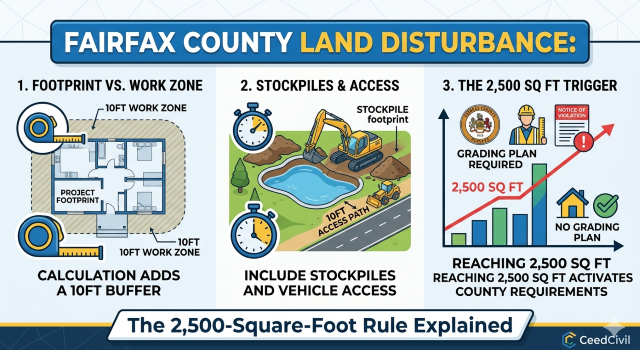
How Fairfax County Calculates Land Disturbance: The 2,500-Square-Foot Rule Explained A homeowner may look at a 1,500-square-foot addition and assume the project involves only 1,500 square feet of land disturbance….
Site Planning
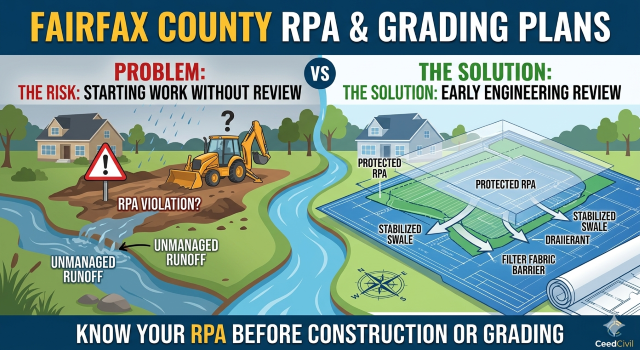
05 Sep: Fairfax County RPA and Grading Plans: What Property Owners Need to Know Before Starting Work
Fairfax County RPA and Grading Plans: What Property Owners Need to Know Before Starting Work You may have checked the zoning. You may have hired a contractor. You may even…
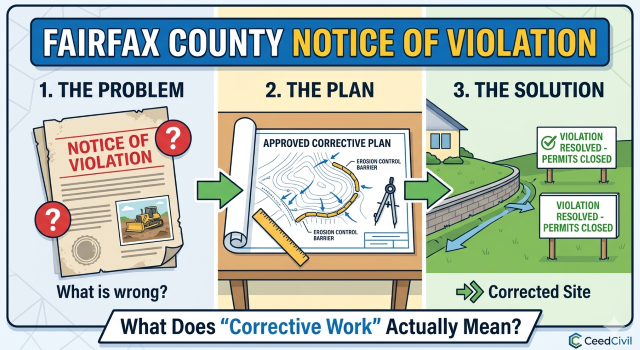
Fairfax County Notice of Violation: What Does “Corrective Work” Actually Mean? You’ve received a Fairfax County Notice of Violation. You read the notice and see language about correcting the violation….
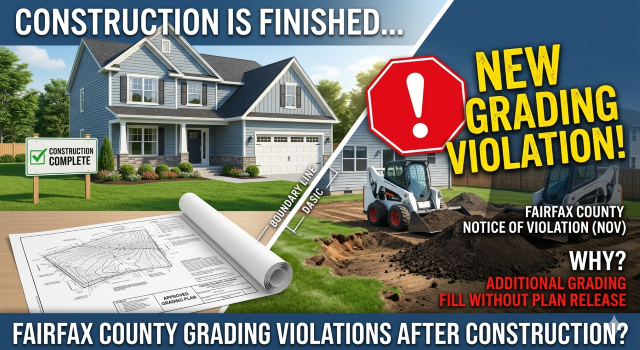
I Already Finished My Construction Project. Why Can I Still Get a Fairfax County Grading Violation? A homeowner finishes construction. The addition is complete. The contractor has left. The building…
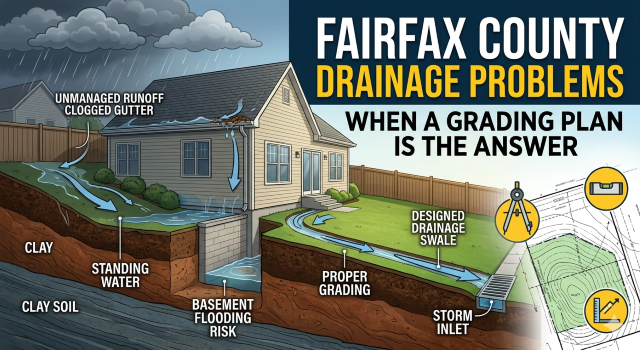
Fairfax County Drainage Problems: When a Grading Plan May Be the Answer Water problems have a way of exposing issues that weren’t obvious before. A backyard floods after a heavy…
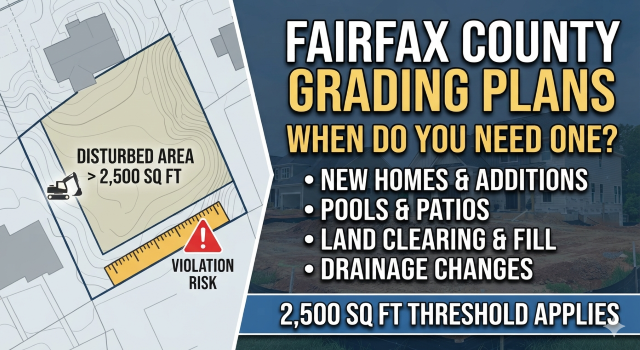
Fairfax County Grading Plans: When Do You Need One? One of the most common questions property owners ask before starting work is: “Do I actually need a grading plan?” Sometimes…
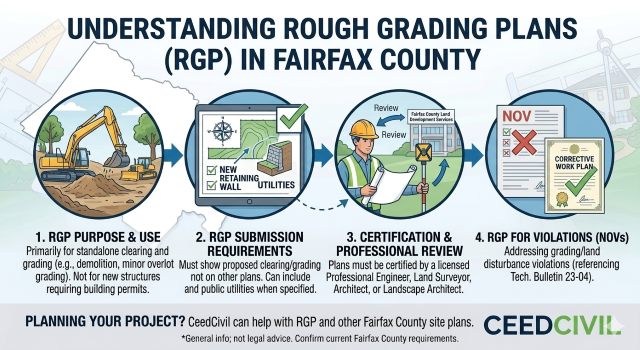
rough grading plan (rgp) in fairfax county: when is one required? If you’re planning land disturbance in Fairfax County, you’ve probably encountered the term RGP, or Rough Grading Plan. An…
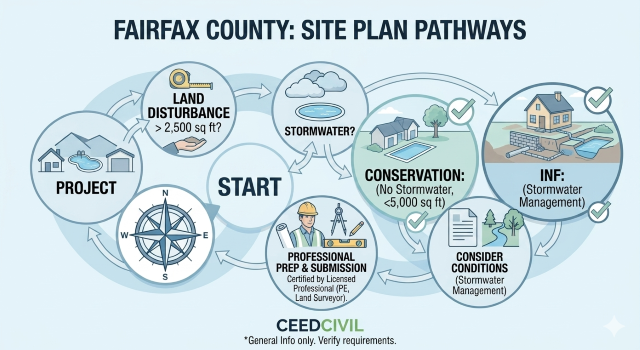
which one do you need? Planning a pool, detached garage, home addition, or another residential improvement in Fairfax County? You may hear two terms during the planning process: Conservation Plan…
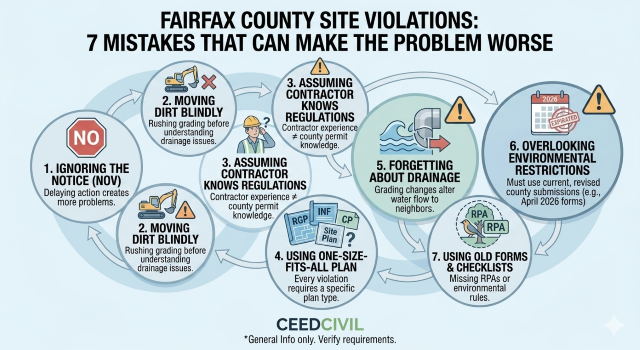
fairfax county site violations: 7 mistakes that can make the problem worse A Fairfax County site violation can start with something that seems minor. Maybe fill dirt was brought onto…
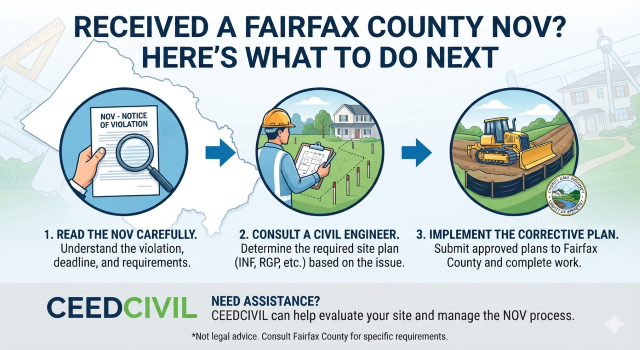
Received a fairfax county notice of violation? Getting a Notice of Violation from Fairfax County can be stressful, especially when you’re not sure what caused the problem or what you’re…